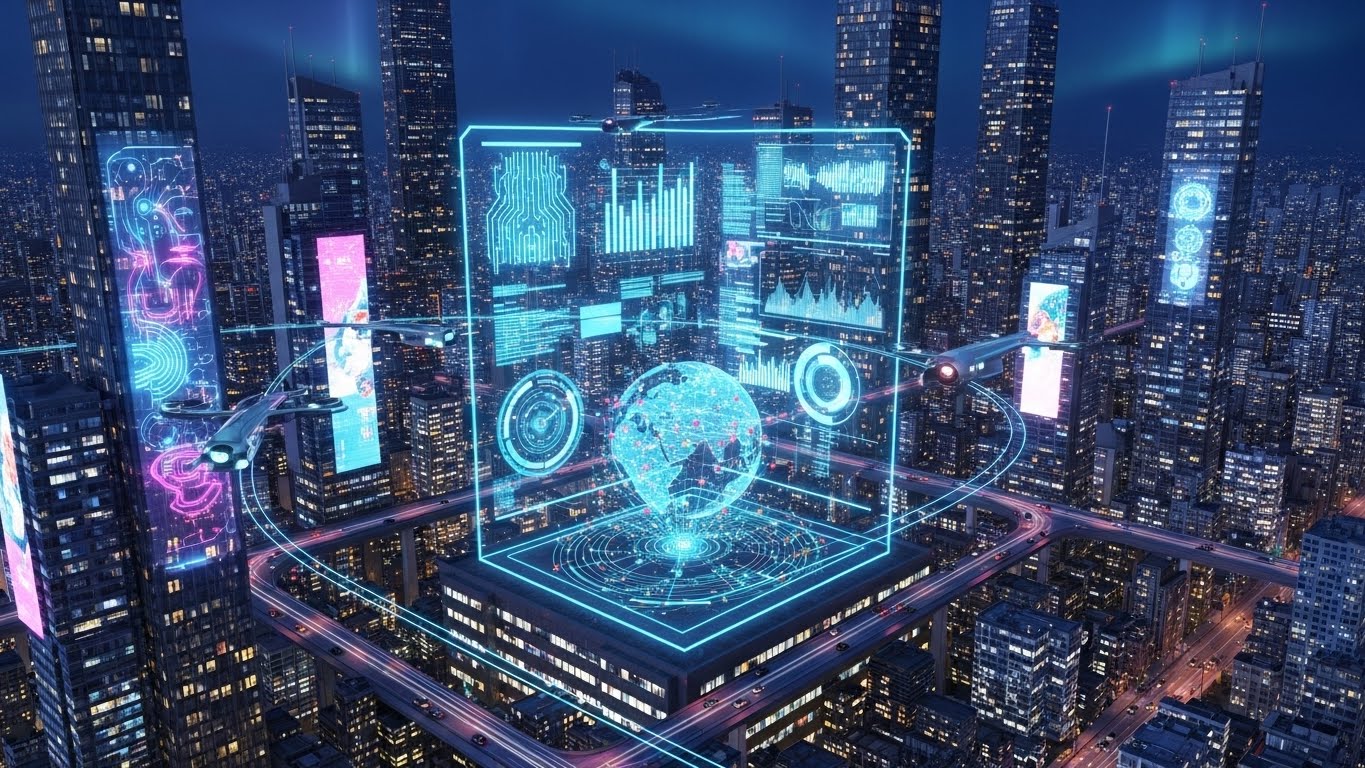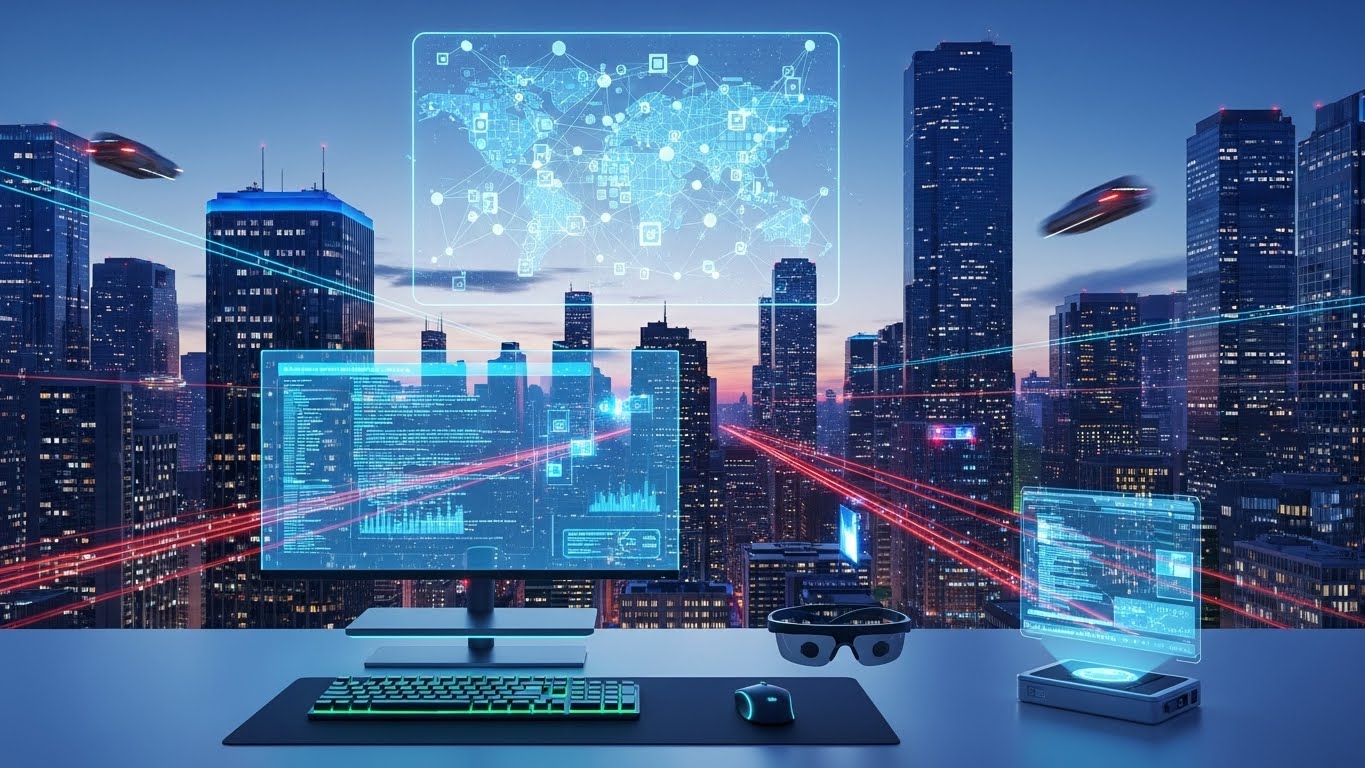


Technology has woven itself into the fabric of every aspect of our lives. From the smartphones in our pockets to the cloud-based systems running major corporations, we live in a world where innovation drives much of our personal and professional experiences. As we continue to navigate the 21st century, it’s evident that technology is not just a tool; it’s a force that is reshaping industries, economies, and even societies. In this post, we will explore how modern technology is transforming the world, the challenges it brings, and the exciting possibilities it holds for the future.
The Rise of Artificial Intelligence and Automation
One of the most transformative forces in modern technology is artificial intelligence (AI). Once a concept relegated to science fiction, AI is now an integral part of our daily lives. AI refers to the capability of machines to mimic human intelligence, allowing them to learn from data, make decisions, and improve over time. This has led to breakthroughs in a variety of fields, from healthcare to customer service, and even entertainment.
In healthcare, AI-powered systems are assisting doctors in diagnosing diseases, analyzing medical imaging, and predicting patient outcomes. AI can process vast amounts of data much faster and more accurately than humans, making it an invaluable tool for early detection and personalized treatment. Machine learning algorithms are also helping to design more effective drugs by identifying potential compounds faster than traditional methods.
In the business world, automation is rapidly changing the way companies operate. From chatbots that handle customer inquiries to complex AI systems that automate supply chain management, businesses are increasingly relying on automation to increase efficiency and reduce costs. Industries like manufacturing, logistics, and even finance are embracing robotic process automation (RPA) to streamline repetitive tasks and optimize operations.
While AI and automation offer enormous benefits, they also raise questions about the future of work. As machines become more capable, concerns about job displacement have emerged. However, experts suggest that AI will not only replace jobs but also create new ones, especially in fields like data science, AI development, and robot maintenance.
The Impact of 5G Technology
The advent of 5G technology represents a leap forward in connectivity that will have far-reaching implications for various industries. 5G promises to offer download speeds up to 100 times faster than current 4G networks, along with lower latency and more reliable connections. These improvements are not just about faster internet; they will unlock new possibilities for the way we use and interact with technology.
For example, 5G will be a key enabler of the Internet of Things (IoT), where everyday objects are connected to the internet and can communicate with each other. With 5G’s low latency and high bandwidth, devices such as smart home appliances, self-driving cars, and industrial machines will be able to operate seamlessly and in real-time. This will not only make our lives more convenient but also open up new opportunities for innovation across industries.
In healthcare, 5G will enable telemedicine and remote surgeries to be conducted more effectively. Surgeons will be able to perform complex operations with the help of robotic arms controlled from a distance, relying on the ultra-low latency of 5G to ensure precision and accuracy. In entertainment, 5G will facilitate the streaming of high-quality virtual and augmented reality content, allowing for immersive experiences that were previously impossible due to bandwidth limitations.
Furthermore, 5G will have a transformative impact on autonomous vehicles. Self-driving cars rely on constant communication with other vehicles, infrastructure, and the cloud to navigate safely and efficiently. With 5G’s faster speeds and low latency, autonomous vehicles will be able to make real-time decisions, significantly improving road safety and efficiency.
The Revolution of Cloud Computing
Cloud computing has fundamentally changed the way individuals and businesses store, access, and manage data. Instead of relying on physical servers and storage devices, cloud computing allows data to be stored on remote servers, accessible from anywhere with an internet connection. This shift has enabled businesses to operate more flexibly, scale quickly, and reduce the costs associated with maintaining physical infrastructure.
For individuals, cloud computing has transformed how we store and share files. Services like Google Drive, Dropbox, and iCloud allow us to store documents, photos, and videos in the cloud, making it easy to access them from any device. Cloud-based applications, such as Google Docs and Microsoft Office 365, have also enabled real-time collaboration, allowing multiple people to work on the same document simultaneously from different locations.
In the business world, cloud computing has become essential for organizations looking to streamline operations, improve collaboration, and enhance scalability. By using cloud-based platforms like Amazon Web Services (AWS), Microsoft Azure, and Google Cloud, companies can deploy applications, store data, and scale their infrastructure without the need for expensive physical servers. The flexibility offered by cloud computing has allowed businesses to innovate faster and become more agile in the face of changing market demands.
Moreover, the rise of cloud computing has paved the way for other disruptive technologies such as artificial intelligence, machine learning, and big data analytics. By leveraging cloud infrastructure, organizations can process and analyze vast amounts of data in real-time, leading to more informed decision-making and improved customer experiences.
The Growth of Virtual and Augmented Reality
Virtual reality (VR) and augmented reality (AR) are technologies that are redefining how we interact with digital content. While VR immerses users in a completely virtual environment, AR overlays digital elements onto the real world. Both technologies are having a profound impact on industries like gaming, entertainment, education, and healthcare.
In gaming, VR has revolutionized the way players experience video games. By wearing a VR headset, players can be transported into fully immersive digital worlds, where they can interact with their environment and characters in ways that traditional gaming cannot replicate. Games like Beat Saber, Half-Life: Alyx, and The Walking Dead: Saints & Sinners have brought VR gaming to the forefront, offering players a new level of immersion and interactivity.
AR, on the other hand, has found widespread use in applications like Pokémon Go and Snapchat filters. However, its potential extends far beyond gaming and entertainment. In industries like retail, AR is being used to enhance the shopping experience by allowing customers to virtually try on clothes or see how furniture will look in their homes. In healthcare, AR is helping surgeons visualize complex medical procedures, while in education, it’s being used to create interactive learning experiences.
The potential of VR and AR goes far beyond gaming and entertainment. As the technologies continue to evolve, they will play an increasingly important role in how we work, learn, and interact with the world around us.
Blockchain and the Future of Data Security
Blockchain technology, the backbone of cryptocurrencies like Bitcoin and Ethereum, is also being explored for its potential to revolutionize data security and transparency. At its core, blockchain is a decentralized, distributed ledger that records transactions across multiple computers, making it almost impossible to alter or tamper with the data once it’s been recorded.
The main benefit of blockchain is its ability to provide secure, transparent, and immutable records without the need for intermediaries like banks or governments. This has major implications for industries like finance, supply chain management, and even healthcare.
In finance, blockchain is already being used to facilitate secure and transparent transactions. Beyond cryptocurrencies, blockchain can streamline cross-border payments, reduce fraud, and improve the efficiency of financial services. In supply chain management, blockchain allows companies to track the origin and movement of goods, ensuring transparency and reducing the risk of fraud. In healthcare, blockchain could be used to securely store patient records, allowing healthcare providers to access critical information without compromising privacy or security.
The potential of blockchain is vast, and as the technology matures, we are likely to see it adopted in more industries, providing new opportunities for secure, transparent, and efficient systems.
Ethical Considerations in Tech
As technology continues to evolve, it raises important ethical considerations that must be addressed. Issues like data privacy, cybersecurity, and algorithmic bias are becoming more prominent as AI, automation, and other technologies become more widespread. For example, the use of personal data by tech companies has sparked debates about privacy rights and how data should be protected.
AI algorithms, which are used to make decisions in everything from hiring practices to criminal justice, can also perpetuate biases if they are not properly trained or monitored. The issue of algorithmic bias has led to calls for greater transparency and accountability in how AI systems are developed and deployed.
Furthermore, the increasing reliance on automation and AI raises questions about the future of work. While these technologies have the potential to improve efficiency and productivity, they also threaten to displace millions of workers. The challenge will be to ensure that the benefits of technological advancement are shared equitably and that workers are retrained and supported as the job market evolves.
Conclusion
We are living in an age of unprecedented technological growth, where innovations in AI, 5G, cloud computing, and other emerging technologies are changing the way we live, work, and interact with the world. While these advancements bring exciting possibilities, they also raise important challenges that must be addressed to ensure that technology serves the greater good.
As we continue to push the boundaries of what’s possible, it’s essential that we consider the ethical implications of our technological progress and work towards creating a future that is both innovative and inclusive. The potential of technology to improve lives, solve complex problems, and create new opportunities is limitless. By embracing these technologies responsibly, we can shape a future that benefits everyone.