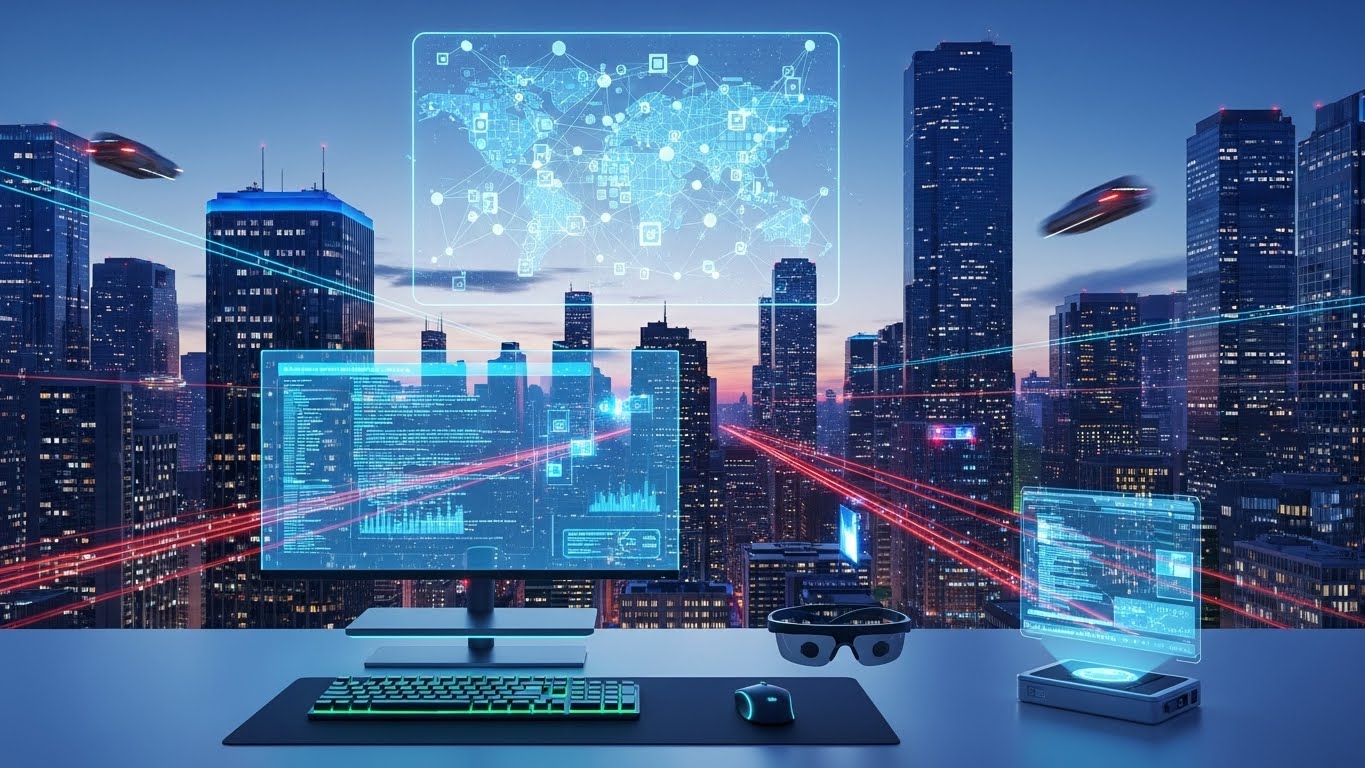

Technology has always been a driving force behind human progress. From the invention of the wheel to the rise of artificial intelligence, the trajectory of technological advancements has consistently transformed the way we live, work, and interact. Today, the pace of technological evolution is faster than ever before, reshaping industries, redefining communication, and revolutionizing daily life. In this blog, we will explore various facets of modern technology, its innovations, applications, and the societal implications that accompany it.
The Rise of Artificial Intelligence
Artificial Intelligence (AI) is no longer a concept confined to science fiction; it has become an integral part of modern technology. AI refers to the development of computer systems capable of performing tasks that traditionally require human intelligence, such as learning, reasoning, problem-solving, and decision-making.
One of the most significant applications of AI is in machine learning, where systems are trained to analyze vast amounts of data to recognize patterns and make predictions. From recommendation engines on streaming platforms to predictive analytics in business, machine learning is reshaping industries. AI-driven automation has also transformed sectors such as healthcare, finance, and manufacturing, enabling faster diagnosis, efficient supply chain management, and optimized financial strategies.
Natural Language Processing (NLP) is another fascinating branch of AI that focuses on enabling machines to understand, interpret, and generate human language. Virtual assistants, chatbots, and real-time language translation tools rely on NLP to offer seamless interaction between humans and machines. As AI continues to advance, ethical considerations and responsible deployment have become critical topics, emphasizing the need for transparency, fairness, and accountability in AI systems.
The Internet of Things: Connecting Our World
The Internet of Things (IoT) refers to a network of interconnected devices that communicate and exchange data with each other. From smart home devices like thermostats and security cameras to industrial sensors in manufacturing plants, IoT has revolutionized how we interact with the physical world.
Smart cities are a prime example of IoT’s transformative potential. By leveraging interconnected devices, cities can monitor traffic, optimize energy usage, and improve public safety. IoT also plays a vital role in healthcare, enabling remote patient monitoring, wearable fitness trackers, and advanced diagnostics. The integration of IoT with AI amplifies its capabilities, allowing for real-time decision-making and predictive maintenance, reducing operational costs and enhancing efficiency.
However, IoT also raises significant concerns regarding data privacy and security. As billions of devices collect sensitive information, ensuring robust cybersecurity measures is essential to prevent unauthorized access, data breaches, and malicious attacks.
The Power of Cloud Computing
Cloud computing has redefined the way individuals and organizations store, manage, and process data. By providing on-demand access to computing resources over the internet, cloud technology eliminates the need for extensive on-site infrastructure, offering scalability, flexibility, and cost efficiency.
There are three primary models of cloud computing: Infrastructure as a Service (IaaS), Platform as a Service (PaaS), and Software as a Service (SaaS). IaaS provides virtualized computing resources, allowing organizations to build and manage their infrastructure without physical hardware. PaaS offers a platform for developing, testing, and deploying applications, while SaaS delivers software applications directly to users via the internet.
Cloud computing has been a catalyst for digital transformation across industries. Businesses can now leverage big data analytics, artificial intelligence, and machine learning without investing heavily in hardware. Cloud technology also enables remote collaboration, ensuring teams can work efficiently from anywhere in the world. Security and compliance remain critical considerations, with cloud providers implementing advanced encryption, access controls, and monitoring mechanisms to protect data integrity.
Cybersecurity in the Digital Age
As technology continues to advance, cybersecurity has become a paramount concern. Cyber threats are becoming increasingly sophisticated, targeting individuals, organizations, and even nation-states. From phishing attacks and ransomware to data breaches and identity theft, the digital landscape presents significant risks that require proactive measures.
Cybersecurity involves protecting systems, networks, and data from unauthorized access, disruption, or damage. It encompasses multiple layers, including network security, application security, endpoint protection, and user awareness. Organizations invest heavily in cybersecurity infrastructure, employing firewalls, intrusion detection systems, and encryption protocols to safeguard their digital assets.
Emerging technologies like AI and machine learning are also being leveraged for cybersecurity. Predictive analytics can identify potential threats, while automated response systems mitigate attacks in real-time. Additionally, cybersecurity regulations and compliance standards are evolving to ensure organizations adhere to best practices, protect sensitive data, and maintain trust in the digital ecosystem.
The Evolution of Mobile Technology
Mobile technology has undergone a remarkable transformation over the past two decades. From basic feature phones to advanced smartphones, mobile devices have become indispensable tools for communication, entertainment, and productivity.
The introduction of 4G and 5G networks has revolutionized mobile connectivity, enabling faster internet speeds, lower latency, and enhanced network reliability. 5G technology, in particular, promises to support a new era of innovation, including autonomous vehicles, augmented reality, and smart cities. Mobile devices are now equipped with powerful processors, high-resolution cameras, and advanced sensors, making them versatile platforms for gaming, virtual reality, and mobile computing.
App ecosystems have flourished alongside mobile technology, providing users with tools for social networking, financial management, health tracking, and more. The integration of AI and IoT with mobile devices has further expanded their capabilities, enabling personalized experiences, predictive services, and seamless device interaction.
Blockchain and the Future of Decentralization
Blockchain technology, originally developed as the underlying framework for cryptocurrencies, has far-reaching applications beyond digital currencies. Blockchain is a distributed ledger system that ensures transparency, security, and immutability of digital transactions.
Decentralized applications (DApps) and smart contracts are transforming industries by reducing intermediaries, streamlining processes, and enhancing trust. Blockchain is being utilized in supply chain management, healthcare, finance, and voting systems to ensure data integrity and accountability.
Cryptocurrencies have brought blockchain into mainstream awareness, creating new opportunities for digital finance, investment, and decentralized finance (DeFi) platforms. While blockchain offers immense potential, challenges such as scalability, energy consumption, and regulatory compliance must be addressed for widespread adoption.
Augmented Reality and Virtual Reality: Redefining Experiences
Augmented Reality (AR) and Virtual Reality (VR) are technologies that are redefining how we experience the digital world. AR overlays digital information onto the physical environment, enhancing real-world interactions. VR, on the other hand, immerses users in entirely virtual environments, creating interactive experiences for gaming, education, and training.
In the entertainment industry, AR and VR are transforming gaming, film, and live events. Educational institutions are leveraging these technologies to create immersive learning experiences, enabling students to explore historical events, scientific phenomena, and complex simulations. In healthcare, VR is being used for surgical training, therapy, and patient rehabilitation, while AR assists in remote diagnostics and real-time procedural guidance.
The convergence of AR, VR, and AI promises to unlock new possibilities, such as virtual collaboration spaces, realistic simulations, and interactive storytelling. As hardware becomes more affordable and software more sophisticated, AR and VR are poised to become mainstream technologies.
Robotics and Automation: Shaping the Future of Work
Robotics and automation have revolutionized industries by enhancing efficiency, precision, and productivity. From manufacturing assembly lines to warehouse logistics, robots are performing tasks that were once labor-intensive or dangerous for humans.
Industrial robots are capable of performing repetitive tasks with high accuracy, reducing errors and operational costs. Collaborative robots, or cobots, are designed to work alongside humans, assisting in complex operations and improving workplace safety. In agriculture, autonomous machinery is optimizing planting, harvesting, and monitoring processes, contributing to sustainable farming practices.
The integration of AI with robotics enables adaptive learning, real-time decision-making, and autonomous navigation. Service robots are now being deployed in healthcare, hospitality, and retail, providing customer assistance, cleaning, and delivery services. While automation raises concerns about job displacement, it also creates opportunities for skill development, innovation, and new career paths in technology-driven sectors.
Green Technology and Sustainable Innovation
As environmental concerns gain global attention, green technology has emerged as a critical area of innovation. Sustainable energy solutions, energy-efficient devices, and environmentally friendly manufacturing practices are transforming industries while reducing ecological impact.
Renewable energy sources such as solar, wind, and hydropower are being increasingly adopted to reduce reliance on fossil fuels. Smart grids and energy management systems optimize power distribution and consumption, promoting sustainability. Electric vehicles, battery storage innovations, and eco-friendly materials are contributing to greener transportation and manufacturing practices.
Technology is also enabling better environmental monitoring and conservation efforts. IoT sensors, drones, and satellite imaging provide real-time data on pollution, deforestation, and wildlife activity, empowering organizations and governments to make informed decisions. The intersection of technology and sustainability underscores the potential of innovation to create a harmonious balance between progress and ecological responsibility.
The Impact of 5G Technology
The rollout of 5G networks marks a significant milestone in telecommunications, offering unprecedented speed, connectivity, and low latency. 5G technology is not just about faster internet for smartphones; it is a catalyst for innovation across industries.
Healthcare benefits from 5G through telemedicine, remote surgery, and real-time monitoring of patient conditions. Autonomous vehicles rely on low-latency 5G networks to communicate with infrastructure and other vehicles, enhancing safety and efficiency. Smart cities leverage 5G for traffic management, surveillance, and IoT integration, improving urban living experiences.
The combination of 5G, AI, and IoT creates a foundation for advanced technologies such as augmented reality, virtual reality, and immersive gaming. As 5G networks expand globally, the potential for transformative applications across sectors continues to grow.
The Future of Human-Computer Interaction
Human-computer interaction (HCI) has evolved from basic keyboard and mouse interfaces to touchscreens, voice commands, gesture recognition, and brain-computer interfaces. The goal of HCI is to create intuitive, efficient, and seamless communication between humans and machines.
Voice assistants like virtual AI companions, smart home devices, and adaptive software demonstrate the increasing sophistication of HCI. Gesture recognition, eye-tracking technology, and haptic feedback are enhancing immersive experiences in gaming, virtual reality, and remote collaboration.
Looking ahead, brain-computer interfaces (BCIs) hold the promise of direct communication between the human brain and computers. BCIs have applications in healthcare, accessibility, and cognitive augmentation, opening new frontiers in how humans interact with technology.
Ethical Considerations in Technology
As technology continues to advance at an unprecedented pace, ethical considerations are becoming increasingly important. Issues such as data privacy, surveillance, AI bias, and the environmental impact of technology demand careful consideration.
Responsible innovation involves creating technologies that prioritize user safety, fairness, transparency, and inclusivity. Policymakers, developers, and organizations must work together to establish frameworks, regulations, and ethical standards that guide the development and deployment of technology. The integration of ethics into technology ensures that innovation benefits society while mitigating potential harm.
Conclusion
The world of technology is vast, dynamic, and constantly evolving. From artificial intelligence and blockchain to robotics, AR/VR, and 5G, each innovation carries the potential to reshape industries, enhance human experiences, and address global challenges. Technology has become more than just tools and devices; it is a catalyst for transformation, connecting people, enabling creativity, and driving progress.
As we look toward the future, the interplay between innovation, ethics, and sustainability will determine how technology shapes our world. Embracing technological advancements while being mindful of their implications will be key to creating a future that is efficient, inclusive, and sustainable. The journey of technological evolution is far from over, and its possibilities are limited only by human imagination and ingenuity.