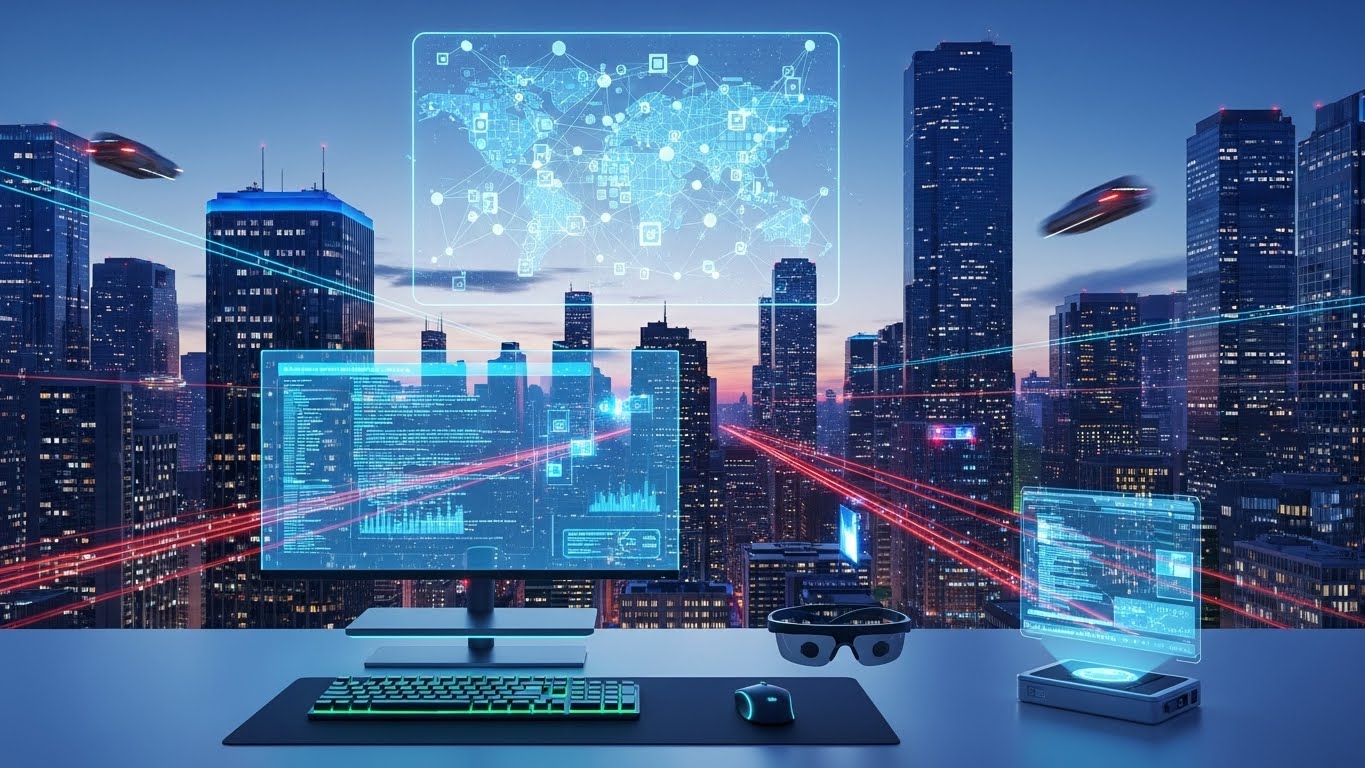


In the past few decades, the world has experienced a profound technological revolution. From smartphones that connect us to a vast digital network to artificial intelligence that learns from vast amounts of data, technology has reshaped nearly every aspect of human life. What once seemed like science fiction is now an integral part of our daily routines, from the way we work and learn to how we socialize and entertain ourselves. As we look ahead, the trajectory of technological advancements promises to bring even greater changes. But how do we navigate this rapidly evolving landscape? And how can we ensure that we leverage these technologies for the greater good?
The Digital Era: An Explosion of Connectivity
The digital era has transformed the way we communicate, consume information, and perform tasks. Gone are the days when information was confined to books, newspapers, or television broadcasts. Today, we live in a world where nearly everything is available at the tap of a finger. Social media platforms allow us to connect with people across the globe in real time, while search engines like Google enable us to access information on virtually any subject in seconds.
Smartphones, once a luxury, have now become indispensable tools, integrating functions such as communication, entertainment, productivity, and even health monitoring into one device. Additionally, the Internet of Things (IoT) has connected everyday objects to the internet, turning homes into smart environments that can adjust lighting, temperature, and security systems based on our preferences.
This explosion of connectivity has not only made our lives more convenient but has also given rise to new business models. E-commerce platforms like Amazon and Alibaba have redefined retail, while companies like Uber and Airbnb have revolutionized transportation and hospitality. In many ways, the digital age has democratized access to services and information, breaking down geographical barriers and fostering a global economy.
Artificial Intelligence: The Brain of Tomorrow
Artificial Intelligence (AI) is arguably the most transformative technology of the 21st century. What began as a niche field of research has now become a core part of industries ranging from healthcare and finance to entertainment and manufacturing. AI systems are capable of performing tasks that once required human intelligence, such as speech recognition, image analysis, and decision-making.
One of the most significant applications of AI is in healthcare, where machine learning algorithms can analyze medical data to identify patterns, diagnose diseases, and even predict patient outcomes. AI is already being used to develop personalized treatments based on individual genetic profiles, offering a glimpse into a future where medicine is tailored to each person’s unique needs.
In addition to healthcare, AI is also transforming industries like finance and marketing. Predictive algorithms can assess market trends and make investment recommendations, while AI-driven advertising platforms target consumers with unprecedented precision based on their browsing habits. As AI continues to evolve, we are likely to see even more innovative applications that improve productivity, enhance creativity, and simplify daily tasks.
Quantum Computing: Unlocking the Power of the Unseen
Quantum computing represents one of the most exciting frontiers of modern technology. Unlike classical computers, which use binary bits to process information (0s and 1s), quantum computers leverage quantum bits or qubits, which can exist in multiple states simultaneously. This ability to perform multiple calculations at once gives quantum computers the potential to solve problems that are currently beyond the reach of even the most powerful supercomputers.
One of the most promising applications of quantum computing is in the field of cryptography. Quantum computers could potentially break current encryption methods that secure everything from online banking to private communications. However, they also offer the possibility of developing new encryption techniques that are virtually unbreakable, which could revolutionize cybersecurity.
In addition to cryptography, quantum computing has the potential to accelerate breakthroughs in fields such as drug discovery, materials science, and climate modeling. By simulating molecular interactions and complex systems, quantum computers could speed up the development of life-saving treatments and help address global challenges like climate change.
Blockchain: The Trust Revolution
Blockchain technology, best known for its role in cryptocurrency, is fundamentally changing the way we think about trust and transactions. At its core, blockchain is a decentralized, secure, and transparent way of recording and verifying transactions. Instead of relying on a central authority to validate transactions, blockchain uses a network of computers to independently verify and record them.
While blockchain is still most associated with Bitcoin and other cryptocurrencies, its potential applications extend far beyond digital currencies. In supply chain management, for example, blockchain can provide a transparent and immutable record of a product’s journey from manufacturer to consumer, ensuring that it is authentic and ethically sourced.
Blockchain can also be applied in voting systems, allowing for tamper-proof elections and transparent public records. In healthcare, blockchain can securely store patient records, allowing for easier sharing of medical data between providers while ensuring privacy. The decentralization of data management provided by blockchain technology could ultimately reshape industries, creating a more secure, transparent, and equitable digital world.
The Rise of Augmented and Virtual Reality
While virtual reality (VR) and augmented reality (AR) are often associated with gaming and entertainment, their potential goes far beyond just providing immersive experiences. VR immerses users in entirely virtual worlds, while AR overlays digital information onto the real world, enhancing our perception of our environment.
In the realm of education, AR and VR are transforming how we learn. Students can explore ancient civilizations through VR simulations or study biology by interacting with 3D models of the human body. These technologies offer a more engaging and interactive approach to learning, making complex subjects more accessible and easier to understand.
In industries like healthcare, AR and VR are already being used for training and surgery simulations. Surgeons can practice complex procedures in virtual environments before performing them on real patients, reducing the risk of errors. AR glasses can assist doctors by providing real-time information during surgeries, enhancing precision and improving patient outcomes.
Moreover, AR and VR are set to revolutionize fields such as retail and real estate. Customers can virtually try on clothes or preview properties without leaving their homes, making shopping and decision-making more convenient and efficient.
The Ethics of Technological Progress
With the rapid pace of technological innovation, ethical considerations have become more pressing than ever. The technologies that are reshaping our world bring about new questions regarding privacy, security, and inequality. As AI becomes more integrated into our lives, how do we ensure that it is used ethically? How do we prevent biases in algorithms from perpetuating discrimination?
Similarly, the growing role of data in decision-making raises concerns about privacy and surveillance. Who owns the data we generate, and how can we ensure that it is used responsibly? The rise of facial recognition technology and the increasing collection of personal data by tech companies has sparked debates about the balance between convenience and individual rights.
As technology continues to evolve, it’s crucial that we not only focus on innovation but also on the ethical implications of these advancements. Striking the right balance between progress and responsibility will be key to ensuring that technology benefits society as a whole, rather than exacerbating existing inequalities or creating new problems.
Conclusion: Embracing the Future with Caution and Hope
The technological advancements of the 21st century are nothing short of revolutionary. From AI that enhances our capabilities to blockchain that redefines trust, and from quantum computing to AR/VR that transforms our perceptions, we are living in an age of incredible innovation. However, as we navigate this rapidly changing landscape, we must also approach technology with a sense of responsibility.
By embracing these innovations thoughtfully and ethically, we can unlock a future that is not only more connected, efficient, and creative but also more equitable and sustainable. The key will lie in how we manage these technologies and ensure they serve humanity’s best interests, fostering a world where innovation and responsibility go hand in hand.