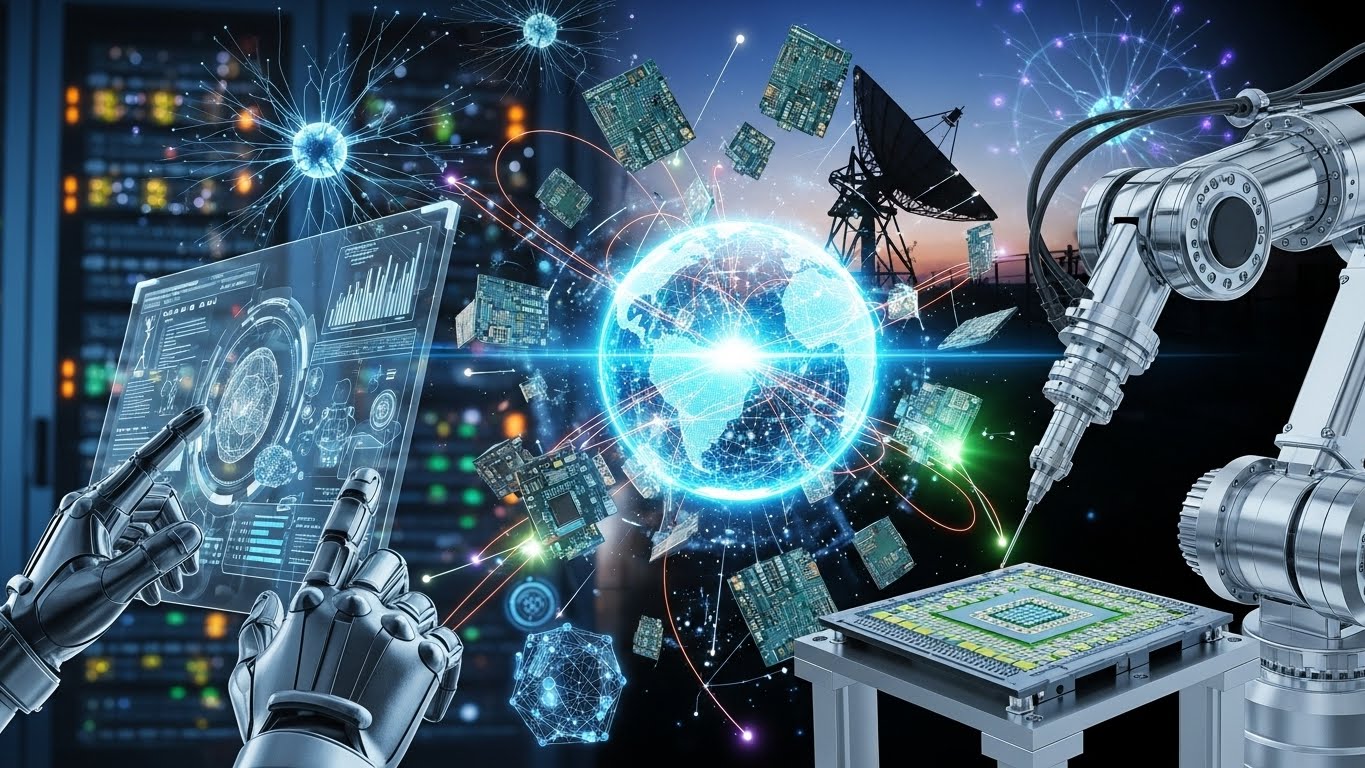

Technology is no longer just a tool for convenience; it has become an integral part of our daily lives, transforming how we live, work, and interact with the world. From the rise of artificial intelligence (AI) to the ever-evolving world of connectivity, technology is accelerating at a pace that is hard to keep up with. As these innovations unfold, they hold the potential to reshape industries, drive economic growth, and even address some of the world’s most pressing challenges. Let’s explore some of the groundbreaking technologies that are changing the game and what the future might look like in a tech-driven world.
Artificial Intelligence: The Powerhouse Behind Modern Innovation
Artificial intelligence has rapidly evolved from a theoretical concept to a central component of various industries. AI is at the heart of many transformative developments, from machine learning algorithms that power recommendation systems on streaming platforms to advanced robotics and autonomous vehicles. By mimicking human cognitive processes, AI is enabling machines to learn from data, make decisions, and improve over time, without explicit programming.
In healthcare, AI is being used to enhance diagnostics, predict patient outcomes, and even design personalized treatment plans. For instance, AI algorithms are already outperforming doctors in detecting certain types of cancer or analyzing medical imagery for abnormalities. In business, AI is helping companies optimize operations, improve customer service through chatbots, and predict market trends with unprecedented accuracy.
Despite its potential, AI brings with it a range of ethical and social challenges. Concerns around privacy, bias, job displacement, and decision-making transparency need to be addressed as AI continues to grow. Nonetheless, AI is here to stay and will undoubtedly continue to drive innovation in a multitude of sectors.
Blockchain: Decentralizing Trust and Creating New Opportunities
Blockchain, the technology underpinning cryptocurrencies like Bitcoin, is poised to revolutionize more than just the financial sector. Its ability to provide secure, decentralized, and transparent transactions is opening up possibilities in industries ranging from supply chain management to voting systems and digital identities.
In supply chains, blockchain provides an immutable record of transactions, allowing businesses to track the origin, status, and movement of goods with greater transparency. This reduces fraud, enhances accountability, and ensures authenticity, particularly for high-value or perishable goods. In the finance sector, blockchain’s decentralized nature eliminates the need for intermediaries, reducing the costs and time associated with traditional transactions.
Additionally, blockchain is paving the way for decentralized applications (dApps) that allow users to interact directly, without relying on central authorities like banks or tech giants. These innovations are particularly exciting for creating a more open and transparent digital economy. As blockchain technology matures, its potential to transform a wide variety of industries grows exponentially.
Quantum Computing: The Next Frontier in Computing Power
Quantum computing is often heralded as the next great leap in the computing world, and for good reason. Unlike classical computers, which rely on binary bits to process information as 0s and 1s, quantum computers use quantum bits (qubits) that can exist in multiple states simultaneously. This ability to process information in parallel allows quantum computers to solve certain problems exponentially faster than classical computers.
Quantum computing has vast implications for fields such as cryptography, materials science, and artificial intelligence. For instance, quantum computers could crack encryption codes that would take classical computers millennia to break, potentially reshaping the landscape of cybersecurity. In drug discovery, quantum simulations could help scientists model molecular interactions with far more accuracy, speeding up the process of developing new treatments.
While we are still in the early stages of quantum computing, major tech companies like Google, IBM, and Microsoft are pouring resources into research and development. As the technology matures, its ability to tackle problems that are currently out of reach for classical computers could open up new frontiers in science, healthcare, and beyond.
5G Connectivity: A Leap Toward a Hyperconnected World
The rollout of 5G networks promises to unlock a new era of connectivity, delivering lightning-fast internet speeds, ultra-low latency, and the ability to connect a massive number of devices simultaneously. While 4G brought us faster mobile browsing and the ability to stream HD video on the go, 5G will provide speeds that are 100 times faster, making it possible to download entire movies in seconds and enabling real-time applications that were previously unimaginable.
The implications of 5G go beyond faster internet speeds. It will be the backbone for the Internet of Things (IoT), allowing millions of smart devices to connect seamlessly, creating smart cities, autonomous vehicles, and industrial automation systems. In healthcare, 5G will enable remote surgeries with real-time feedback and better access to telemedicine for patients in remote areas. The possibilities for innovation across industries are vast, and 5G will be a key enabler of the next generation of technological advancements.
However, the transition to 5G is not without its challenges. Infrastructure rollout is costly and complex, and concerns around security and privacy are critical as more devices become connected. But with the promise of faster speeds and more reliable connections, 5G is set to be a game-changer.
Automation and Robotics: Redefining Work and Industry
Automation is no longer just a buzzword—it’s a reality that is transforming industries around the globe. From robotics in manufacturing to AI-driven automation in offices, machines are taking on more roles traditionally filled by humans. In factories, robots are performing tasks ranging from assembly to quality control, increasing efficiency and reducing human error. Similarly, AI algorithms are handling customer service tasks, analyzing data, and even making decisions that would have required human intervention in the past.
The potential for automation is vast, but it also brings challenges, particularly in terms of the workforce. While automation increases productivity and drives down costs, it also raises concerns about job displacement, especially for lower-skilled workers. As automation continues to reshape industries, reskilling and upskilling programs will be critical to preparing workers for a rapidly changing job market.
Despite these concerns, automation holds the promise of improving safety, reducing operational costs, and freeing up humans to focus on higher-value tasks, such as problem-solving, creativity, and decision-making. It’s a tool for progress, but one that requires careful management to ensure its benefits are broadly distributed.
Tech for Sustainability: Driving Environmental Change
With the increasing urgency of addressing climate change, technology is playing a critical role in creating sustainable solutions. Renewable energy technologies such as solar, wind, and geothermal power are becoming more efficient and cost-effective, offering a cleaner alternative to fossil fuels. Advances in energy storage are also making it possible to harness and store renewable energy more effectively, ensuring a consistent supply even when the sun isn’t shining or the wind isn’t blowing.
Electric vehicles (EVs) are another area where technology is helping reduce carbon emissions, with companies like Tesla leading the charge in creating affordable and efficient electric cars. Beyond transportation, tech innovations are also helping optimize resource use in agriculture, reducing waste, and improving crop yields through the use of drones, AI, and IoT devices.
As the world continues to focus on sustainability, tech will be central to solving environmental challenges. Whether through clean energy innovations, more efficient waste management, or smarter consumption patterns, the tech industry is poised to drive the change needed to create a greener, more sustainable future.
Conclusion: Embracing the Future of Technology
The rapid pace of technological advancement shows no sign of slowing down. From AI and blockchain to quantum computing and 5G, the innovations of today are laying the foundation for a more connected, efficient, and sustainable world tomorrow. While challenges remain, particularly in terms of privacy, security, and the workforce, the potential for technology to transform our lives is enormous.
As we continue to embrace these emerging technologies, it is essential that we do so with a sense of responsibility. The future of tech is not just about innovation—it’s about ensuring that these advancements benefit humanity as a whole. By fostering inclusivity, sustainability, and ethical practices, we can shape a future where technology not only enhances our lives but also creates a better world for generations to come.