
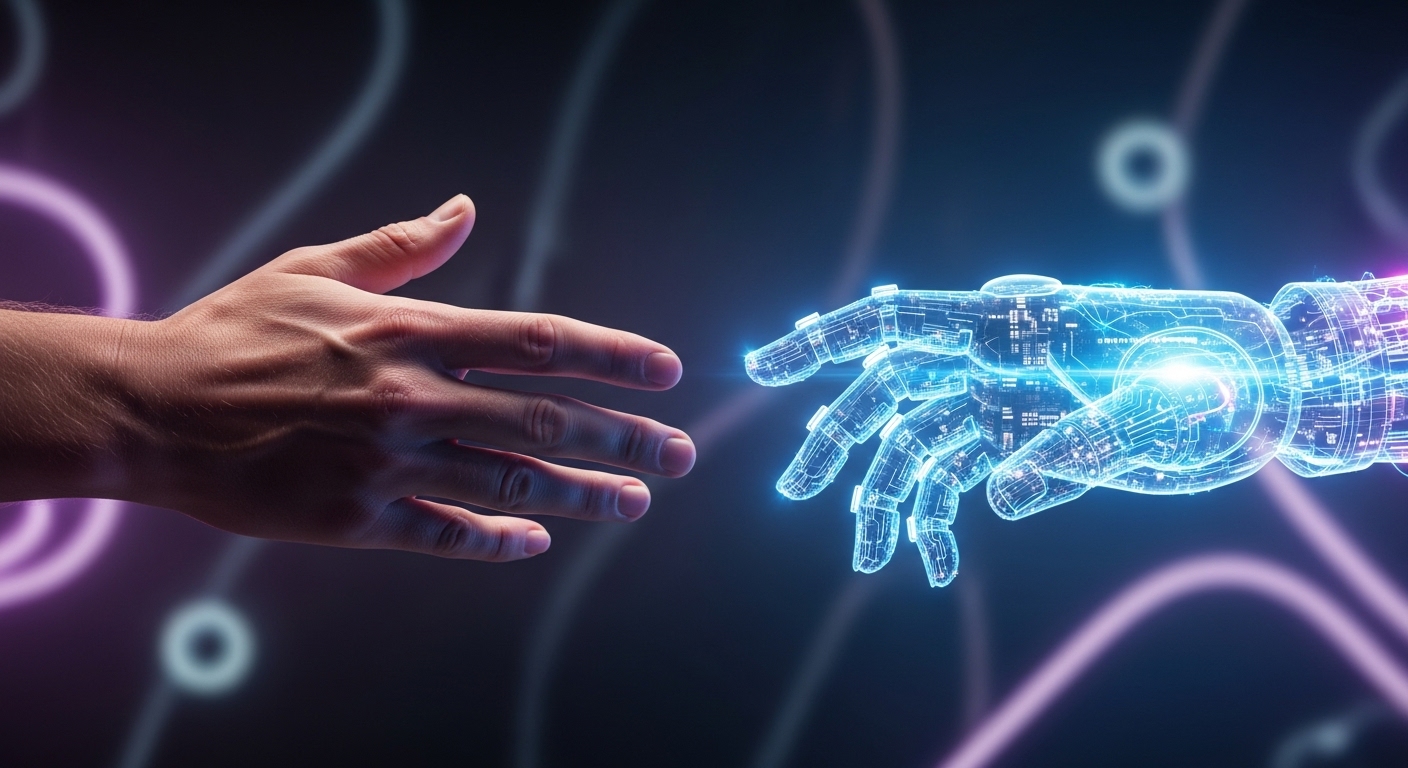
Introduction: Technology as the Engine of Progress
Technology is no longer just a tool; it has become an integral part of human existence, shaping the way we communicate, work, learn, and live. From the invention of the wheel to the rise of artificial intelligence, technological advancements have constantly reshaped society. Today, we are witnessing a convergence of technologies that are more powerful, interconnected, and intelligent than ever before. These innovations not only enhance our daily lives but also pose challenges and opportunities that demand careful consideration.
Modern technology affects almost every aspect of our lives, from how we interact with others to how industries operate. As digital transformation accelerates, understanding the different facets of technology becomes crucial, not only for professionals but also for everyday users. In this blog, we explore some of the most significant technological trends, their applications, and the implications they carry for the future.
Artificial Intelligence: Redefining Intelligence
Artificial intelligence (AI) is one of the most transformative technologies of the 21st century. AI refers to systems or machines that mimic human intelligence to perform tasks, ranging from simple problem-solving to complex decision-making. Its impact is visible across industries such as healthcare, finance, transportation, education, and entertainment.
One of the most notable applications of AI is in machine learning, a subset that allows machines to learn from data and improve over time without explicit programming. Machine learning powers recommendations on streaming platforms, predictive analytics in business, fraud detection in banking, and even autonomous vehicles.
Natural language processing (NLP), another branch of AI, enables machines to understand and interact with human language. Technologies like AI chatbots, virtual assistants, and real-time translation systems are becoming increasingly sophisticated, changing the way humans communicate with machines.
AI is not without its ethical and societal challenges. Concerns about privacy, job displacement, bias in algorithms, and the potential for autonomous decision-making raise important questions. As AI continues to evolve, balancing innovation with responsibility becomes crucial.
Internet of Things: Connecting Everything
The Internet of Things (IoT) is the concept of connecting physical devices to the internet to collect and exchange data. These devices range from everyday household items, like smart refrigerators and thermostats, to industrial machinery and city infrastructure. IoT enables unprecedented levels of automation, efficiency, and real-time monitoring.
In homes, IoT devices enhance convenience and energy efficiency. Smart lighting systems can adjust brightness based on the time of day or occupancy. Wearable devices track health metrics like heart rate and sleep patterns, offering insights that were previously difficult to access.
Industrially, IoT improves operational efficiency. Sensors in manufacturing plants monitor machinery to predict maintenance needs, reducing downtime. In agriculture, smart sensors monitor soil moisture and crop health, enabling precision farming that maximizes yield while conserving resources.
However, IoT also raises security concerns. Each connected device represents a potential vulnerability, making cybersecurity a top priority. Ensuring that IoT systems are secure and privacy-conscious is essential as we continue to build a connected world.
Blockchain Technology: Beyond Cryptocurrency
Blockchain is often associated with cryptocurrencies, but its potential extends far beyond digital money. At its core, blockchain is a decentralized and immutable ledger that records transactions across multiple computers. This structure provides transparency, security, and trust without the need for a central authority.
Industries are exploring blockchain for supply chain management, voting systems, digital identity verification, and healthcare records. For instance, blockchain can trace the origin of food products, ensuring quality and ethical sourcing. In finance, it enables faster and more secure cross-border transactions.
Smart contracts, self-executing agreements coded on the blockchain, are transforming how businesses automate processes and enforce agreements. By removing intermediaries, blockchain reduces costs and increases efficiency.
Despite its advantages, blockchain faces challenges such as scalability, energy consumption, and regulatory uncertainty. As the technology matures, these challenges are gradually being addressed through innovations like proof-of-stake consensus mechanisms and more efficient blockchain protocols.
Cloud Computing: The Backbone of Digital Transformation
Cloud computing has revolutionized the way organizations store, manage, and process data. Instead of relying on local servers, businesses can access computing resources over the internet, enabling scalability, flexibility, and cost efficiency.
Cloud services fall into three main categories: Infrastructure as a Service (IaaS), Platform as a Service (PaaS), and Software as a Service (SaaS). IaaS provides virtualized computing resources, PaaS offers platforms for application development, and SaaS delivers ready-to-use software applications over the internet.
Companies leverage cloud computing to store massive amounts of data, run complex analytics, host websites, and develop applications. It also supports collaboration, as teams can access shared documents and tools from anywhere in the world.
Security and data privacy remain critical considerations in cloud computing. Organizations must ensure proper encryption, access controls, and compliance with regulations to safeguard sensitive information. Nevertheless, the cloud continues to be a cornerstone of modern digital transformation.
Quantum Computing: Unlocking New Frontiers
Quantum computing represents a fundamental shift in computation. Unlike classical computers that use bits to represent 0s or 1s, quantum computers use qubits that can exist in multiple states simultaneously. This property, known as superposition, combined with entanglement, enables quantum computers to perform certain calculations exponentially faster than traditional computers.
Potential applications of quantum computing are immense. In cryptography, quantum computers could break existing encryption methods while also enabling new forms of secure communication. In medicine, they could simulate complex molecular interactions, accelerating drug discovery. In optimization, they could solve problems that are currently infeasible for classical computers.
Quantum computing is still in its early stages, with significant technical challenges to overcome. Nevertheless, research and investments are growing rapidly, and the technology holds the promise of reshaping industries and solving problems that were once thought unsolvable.
Augmented and Virtual Reality: Transforming Experiences
Augmented reality (AR) and virtual reality (VR) are changing the way we experience the digital and physical worlds. AR overlays digital information onto the real world, enhancing how we interact with our environment. VR, on the other hand, immerses users in entirely virtual environments.
In gaming and entertainment, AR and VR provide immersive experiences that captivate audiences. In education, they enable interactive learning, allowing students to explore historical events, scientific concepts, or complex machinery in a hands-on manner. In healthcare, VR assists in surgical training and pain management, while AR helps surgeons visualize anatomy during procedures.
The adoption of AR and VR is expanding beyond entertainment. Retailers use AR to allow customers to virtually try products, architects use VR for virtual walkthroughs of buildings, and training programs leverage immersive simulations to enhance learning outcomes.
5G Technology: Powering Connectivity
The rollout of 5G networks represents a leap forward in mobile connectivity. Compared to previous generations, 5G offers significantly higher data speeds, lower latency, and the capacity to connect a massive number of devices simultaneously.
This technology enables innovations such as autonomous vehicles, remote surgery, smart cities, and immersive AR/VR experiences. Industries can leverage 5G to improve real-time communication, enhance operational efficiency, and create new business models.
The deployment of 5G infrastructure is challenging and requires substantial investment. Additionally, concerns about spectrum management, privacy, and health impacts are part of ongoing discussions. Nevertheless, 5G is poised to be a key enabler of the next wave of digital transformation.
Robotics: From Automation to Autonomy
Robotics is no longer confined to industrial assembly lines. Modern robots are increasingly autonomous, intelligent, and capable of performing tasks in diverse environments. Robots assist in manufacturing, logistics, healthcare, agriculture, and even household chores.
In manufacturing, robots enhance productivity and precision. In healthcare, surgical robots perform minimally invasive procedures with higher accuracy. Delivery robots and drones are transforming logistics by enabling faster and more efficient distribution.
Advances in AI, sensors, and machine vision have made robots smarter and more adaptable. As robots become more integrated into daily life, discussions around ethics, employment, and human-robot interaction are gaining importance.
Cybersecurity: Protecting the Digital World
As technology advances, the need for robust cybersecurity becomes more critical. Cyber threats have evolved from simple viruses to sophisticated attacks targeting governments, corporations, and individuals. Protecting data, networks, and systems is essential for maintaining trust and stability in the digital age.
Cybersecurity involves multiple layers, including encryption, authentication, firewalls, intrusion detection, and threat intelligence. Organizations must adopt proactive strategies to prevent breaches, detect anomalies, and respond to incidents effectively.
The rise of AI and IoT has created new attack vectors, requiring continuous innovation in cybersecurity. Cybersecurity professionals are now tasked with defending against increasingly complex threats while ensuring compliance with regulations and ethical standards.
Emerging Technologies on the Horizon
Beyond the technologies already transforming our world, several emerging innovations hold promise for the near future. These include:
- Biotechnology and Genetic Engineering: Advancements in CRISPR and synthetic biology enable precise manipulation of genes, offering solutions for disease treatment, agriculture, and environmental sustainability.
- Nanotechnology: At the atomic and molecular scale, nanotechnology is revolutionizing materials science, medicine, and energy solutions.
- Space Technology: Private and public investments in space exploration, satellite networks, and extraterrestrial research are expanding humanity’s reach beyond Earth.
- Edge Computing: By processing data closer to its source, edge computing reduces latency and enhances real-time decision-making in IoT, AR/VR, and autonomous systems.
These technologies, while still developing, have the potential to redefine industries, economies, and daily life in profound ways.
Conclusion: Embracing the Technological Future
The pace of technological change is accelerating, bringing both opportunities and challenges. From AI to quantum computing, IoT to AR/VR, modern technology is reshaping the way we live, work, and interact with the world. Embracing these innovations requires curiosity, adaptability, and a commitment to ethical and responsible use.
As we navigate this era of rapid technological advancement, it is essential to consider the broader societal implications, including privacy, security, employment, and equity. By understanding and leveraging technology thoughtfully, we can harness its potential to solve complex problems, enhance human experience, and create a more connected, efficient, and sustainable future.
The world of technology is vast, dynamic, and full of possibilities. Staying informed, embracing innovation, and cultivating digital literacy are no longer optional—they are essential for thriving in the modern age. The journey of technological discovery continues, and the future is only limited by our imagination.