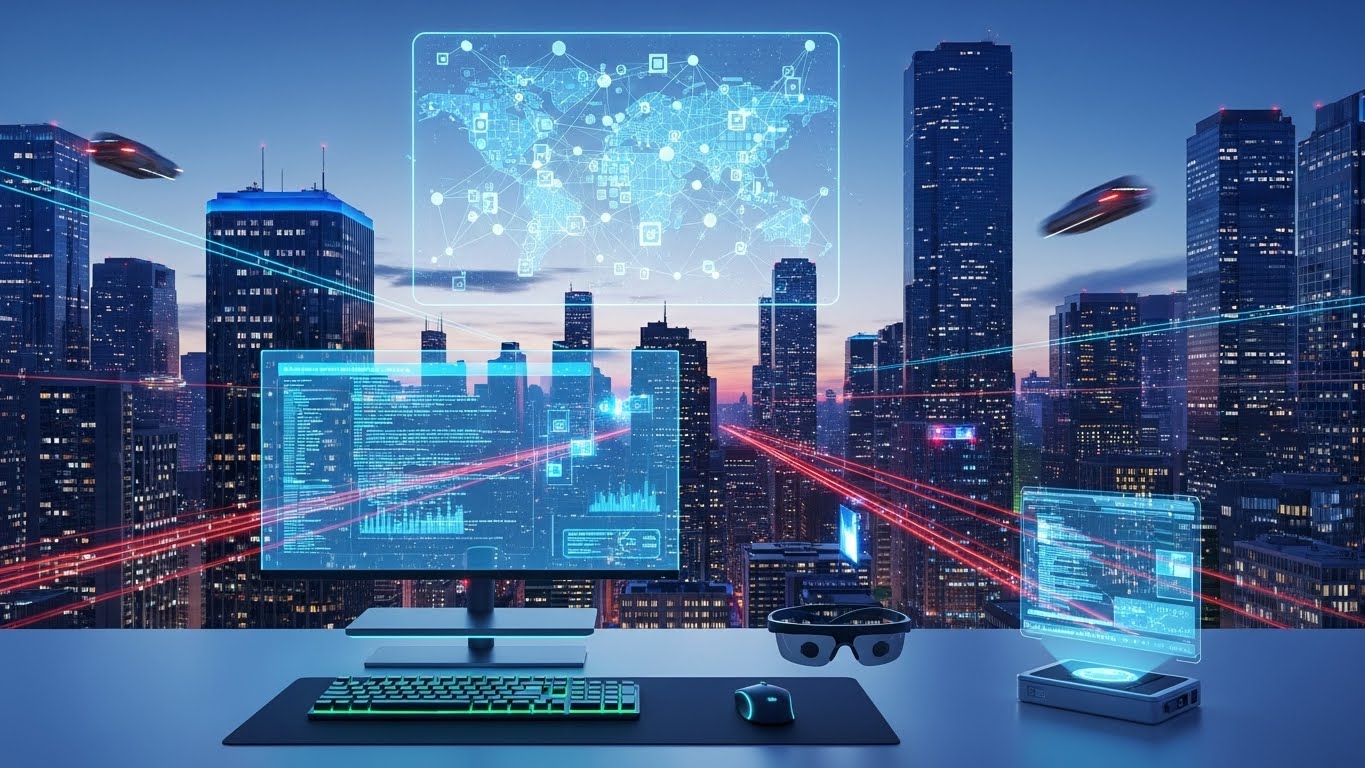


Technology is the heartbeat of modern civilization. It has become the defining force behind how we live, work, learn, and dream. From the invention of the wheel to the rise of artificial intelligence, technology has continuously transformed the human experience, shaping societies, industries, and even our understanding of what it means to be human. In today’s world, technology is not just a tool—it is a companion, a teacher, a creator, and sometimes even a decision-maker. The story of technology is the story of human ingenuity itself, a journey marked by curiosity, innovation, and an unending desire to make life better, faster, and more connected.
The Roots of Innovation
The history of technology stretches back to the dawn of human existence. Our earliest ancestors developed primitive tools made of stone and wood, learning how to harness fire and create basic weapons for hunting. These small innovations marked the beginning of human mastery over nature. As societies grew, so did their inventions—the discovery of metalworking, the creation of the wheel, and the development of agriculture all laid the foundation for civilization. Ancient engineers in Egypt, Greece, and China pushed the limits of human creativity, building monuments, irrigation systems, and complex machinery that would inspire generations to come. Over time, technology evolved alongside humanity, each advancement opening new doors to discovery and transformation.
The Industrial Revolution: The Turning Point
The world changed forever in the 18th and 19th centuries when the Industrial Revolution transformed how goods were produced, how cities were built, and how people lived. Steam engines replaced manual labor, factories rose in place of farmlands, and transportation networks connected distant regions. This period marked the beginning of large-scale technological impact, where innovation no longer served just survival but became a driver of economy and progress. The Industrial Revolution also laid the groundwork for future innovations in science, communication, and manufacturing. Electricity, telegraphs, and mechanized production not only revolutionized industries but reshaped social structures and human ambition.
The Digital Revolution
Fast forward to the 20th century, and technology took another leap—the birth of the digital age. Computers, once the size of rooms, evolved into compact, powerful machines that could perform calculations, store data, and communicate across vast distances. The invention of the transistor, the microchip, and later the personal computer gave birth to the modern digital world. The arrival of the internet connected humanity in ways never before possible, shrinking the globe into a vast but intimate network of ideas, cultures, and information. The digital revolution democratized knowledge, changed economies, and gave rise to entirely new industries—from software development to cybersecurity. It turned data into one of the most valuable resources on earth, comparable to oil in its influence on power and policy.
Technology in Everyday Life
Today, technology is woven into every aspect of our lives. From the moment we wake up to the moment we sleep, it surrounds us. Smartphones act as alarm clocks, assistants, cameras, and communication hubs. Smart homes adjust lighting, temperature, and security with voice commands. Cars navigate themselves, wearable devices track our health, and cloud platforms store our memories and work. What was once science fiction is now daily reality. Even the smallest tasks, like ordering food or chatting with friends, rely on complex technological systems working seamlessly behind the scenes. The convenience is unmatched, but it also raises questions about dependency, privacy, and the meaning of human interaction in an age of automation.
The Rise of Artificial Intelligence
Among the most transformative advancements of the modern era is artificial intelligence. AI has evolved from simple rule-based programs into sophisticated systems capable of learning, reasoning, and even creating. Machine learning algorithms analyze patterns in massive datasets, powering recommendation systems, speech recognition, and image analysis. Deep learning models have given rise to natural language understanding, enabling machines to communicate, translate, and assist in ways that feel almost human. AI is revolutionizing industries from healthcare and finance to education and entertainment. It is diagnosing diseases earlier, predicting market trends, and even composing music or writing poetry. However, as powerful as it is, AI also brings ethical challenges—questions about bias, job displacement, surveillance, and control. The future of AI depends not only on innovation but also on responsibility.
The Internet of Things and Connected Living
The concept of the Internet of Things (IoT) has extended connectivity beyond computers and phones to everyday objects. Smart appliances, vehicles, wearables, and even city infrastructure are now part of a global web of interconnected devices. This connectivity has created the foundation for smart homes, smart cities, and intelligent transportation systems. Sensors collect data from the environment, analyze it, and respond in real time. This makes life more efficient, safe, and personalized—but also more vulnerable. With billions of devices online, cybersecurity becomes a critical concern. Balancing convenience with security is one of the defining challenges of our technological age.
The Power of Data
In the digital world, data is the new currency. Every click, transaction, and search generates information that can be analyzed to understand behavior, improve services, and predict trends. Businesses rely on data analytics to make decisions, governments use it to design policies, and researchers use it to uncover new insights about the universe. Yet, the sheer volume of data presents both opportunity and risk. Misuse of personal information, data breaches, and lack of transparency have sparked global debates about privacy and digital ethics. The future of technology will depend on how societies manage and protect data while continuing to innovate.
The Role of Cloud Computing
Cloud computing has redefined how data and applications are stored, accessed, and shared. Instead of relying on physical storage, individuals and businesses can now use remote servers to host and process information. This shift has made technology more scalable, affordable, and accessible. Cloud services power everything from streaming platforms to enterprise software, allowing collaboration across continents and time zones. The rise of cloud infrastructure has also fueled the growth of artificial intelligence, big data analytics, and machine learning by providing the computational power needed for complex tasks. The cloud represents not just a technological innovation but a new philosophy of flexibility and connectivity.
The Evolution of Communication Technology
Human communication has been revolutionized time and again by technology. The printing press spread ideas, the telephone connected voices, and the internet united the world. Social media has now taken communication to an entirely new level, creating a digital society where information travels instantly. Platforms for messaging, video calls, and online communities have transformed how we form relationships, share news, and express ourselves. While this connectivity empowers individuals, it also challenges traditional media, privacy norms, and even mental health. The rapid spread of misinformation and online toxicity are byproducts of this interconnected age. The task ahead is to harness communication technology for truth, empathy, and constructive dialogue.
Technology in Education
Education has undergone a radical transformation thanks to technology. Traditional classrooms have evolved into hybrid learning environments supported by digital tools. Interactive simulations, virtual classrooms, and online courses make learning accessible to anyone with an internet connection. Artificial intelligence tutors, adaptive learning software, and educational games personalize the experience, catering to each student’s pace and style. This democratization of knowledge is one of technology’s greatest achievements, breaking barriers of geography and privilege. However, the digital divide remains—a gap between those with access to technology and those without. Bridging this divide is essential to ensure that technology empowers rather than excludes.
Technology in Healthcare
Few fields have benefited from technology as much as healthcare. From advanced imaging and robotic surgery to telemedicine and wearable health monitors, technology has improved diagnosis, treatment, and prevention. Artificial intelligence helps detect diseases like cancer and Alzheimer’s earlier, while data analytics predicts outbreaks and improves patient care. The rise of biotechnology and genetic engineering offers new hope for personalized medicine tailored to individual DNA. Yet, as health data becomes more digital, concerns about privacy and ethics grow. The challenge is to use technology to heal and help without compromising human dignity and trust.
The Environmental Impact of Technology
Technology has brought immense progress, but it has also contributed to environmental challenges. Industrialization, electronic waste, and energy consumption are pressing global concerns. However, technology is also the key to solving these very problems. Innovations in renewable energy, sustainable manufacturing, and smart agriculture are helping reduce carbon footprints and preserve natural resources. Electric vehicles, solar panels, and AI-driven climate modeling are just a few examples of how technology can support a greener future. The balance between progress and preservation defines the moral responsibility of modern innovation. Sustainable technology is not just an option—it is a necessity for survival.
The Rise of Automation and Robotics
Automation is transforming industries at an unprecedented rate. Robots now assemble products, deliver packages, and even perform surgeries. Automated systems drive efficiency and precision, reducing human error and operational costs. However, this shift also raises fears of job displacement and economic inequality. The future workforce will need to adapt, focusing on creativity, problem-solving, and emotional intelligence—skills machines cannot easily replicate. Collaboration between humans and robots, often called “cobotics,” represents the next frontier of productivity, where technology enhances rather than replaces human potential.
The World of Virtual and Augmented Reality
Virtual reality (VR) and augmented reality (AR) are redefining how people experience the world. VR immerses users in entirely digital environments, while AR overlays digital elements onto the real world. These technologies are no longer limited to gaming—they are transforming industries such as education, medicine, design, and tourism. Architects visualize buildings before construction, doctors practice complex surgeries, and students explore historical events as if they were there. The potential of immersive technology lies in its ability to merge imagination with reality, creating new dimensions of learning, creativity, and entertainment.
Cybersecurity and the Digital Frontier
As our dependence on technology grows, so does the threat of cybercrime. Data breaches, identity theft, and ransomware attacks are becoming more sophisticated and frequent. Cybersecurity has become one of the most critical fields in the modern world, protecting individuals, organizations, and even nations from digital threats. The challenge is constant—hackers evolve as fast as security systems do. Artificial intelligence, encryption, and blockchain are being used to strengthen defense mechanisms, but ultimate security depends on awareness and vigilance. In a connected world, cybersecurity is not just a technical issue—it is a matter of global stability.
Space Technology and Beyond Earth
Technology has always inspired humanity to look beyond its limits, and nowhere is this more evident than in space exploration. Rockets, satellites, and telescopes have allowed humans to explore distant planets and understand the cosmos. Space technology contributes far more than exploration—it supports global communication, navigation, weather forecasting, and environmental monitoring. Private companies and international collaborations are making space travel more accessible, sparking a new age of exploration. The dream of colonizing other planets, once a fantasy, is now part of serious scientific research. Space technology embodies humanity’s eternal quest to explore, discover, and expand horizons.
The Ethical Dimensions of Technology
As technology grows more powerful, its moral implications become more significant. Issues like privacy, automation, digital addiction, and algorithmic bias demand thoughtful regulation and ethical frameworks. Innovation without ethics can lead to exploitation and inequality. The tech industry faces the challenge of balancing progress with principles, ensuring that technology serves humanity rather than controls it. Transparency, accountability, and inclusivity must guide the next phase of development. The goal is not just smarter technology but wiser use of it.
The Future of Technology
Looking ahead, the possibilities seem endless. Quantum computing, biotechnology, nanotechnology, and artificial intelligence promise to reshape every aspect of life. Machines may one day think, heal, and build beyond human capability. The boundaries between the physical and digital worlds will continue to blur, creating new realities and redefining existence itself. But the ultimate question remains—what will humans do with such power? The future of technology depends on the choices we make today. Innovation must be guided by empathy, ethics, and a commitment to the greater good.
Conclusion
Technology is both the mirror and the architect of human civilization. It reflects our intelligence, creativity, and ambition, while also shaping the path we walk toward the future. From the earliest tools to the most advanced algorithms, technology has always been about one thing: progress. Yet, true progress lies not just in what we can build, but in how we use it. The story of technology is still being written, and each generation adds its own chapter—one filled with challenges, breakthroughs, and dreams. Whether it brings us closer together or divides us depends on our wisdom and humanity. In the end, technology is not an external force—it is a reflection of who we are and who we aspire to be.